E-mail us: [email protected]
24-hodinová služba – 7 dní v týždni

Potrebujete pomoc? Zavolajte nám!
+86-573-8553-5198
E-mail us: [email protected]
24-hodinová služba – 7 dní v týždni
Potrebujete pomoc? Zavolajte nám!
+86-573-8553-5198


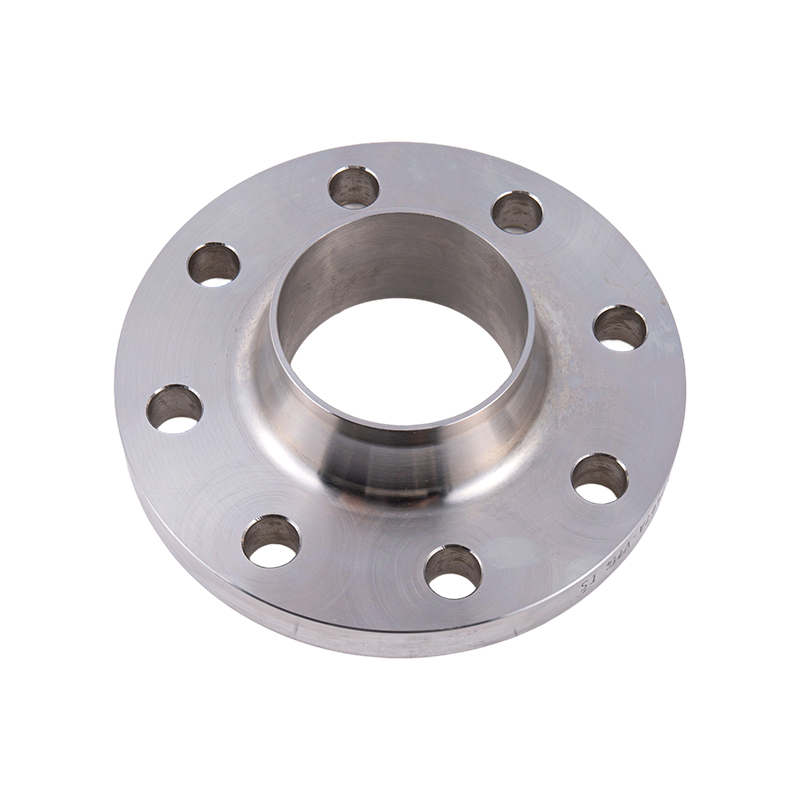
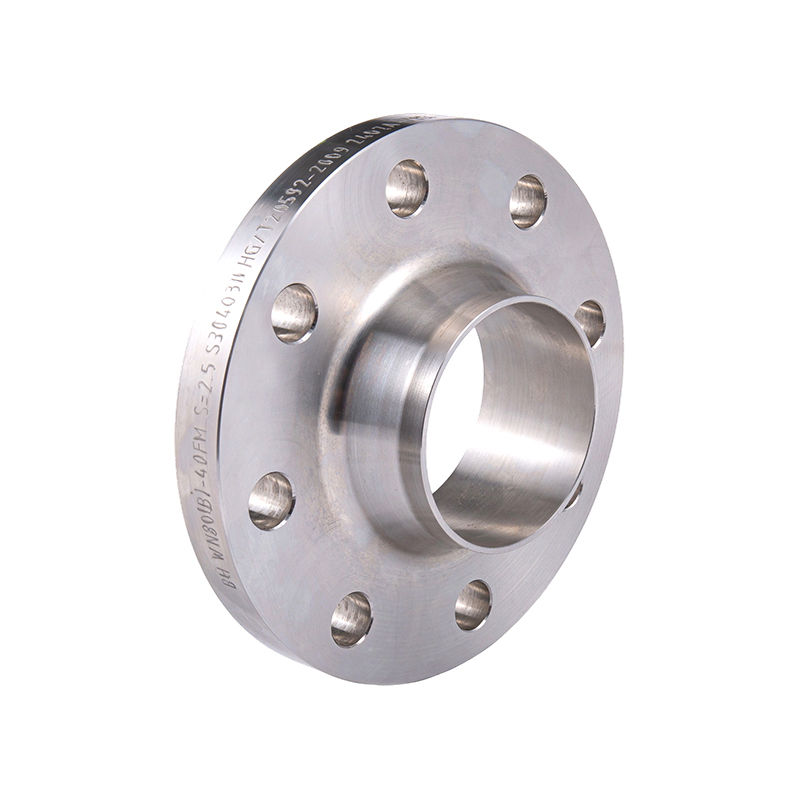
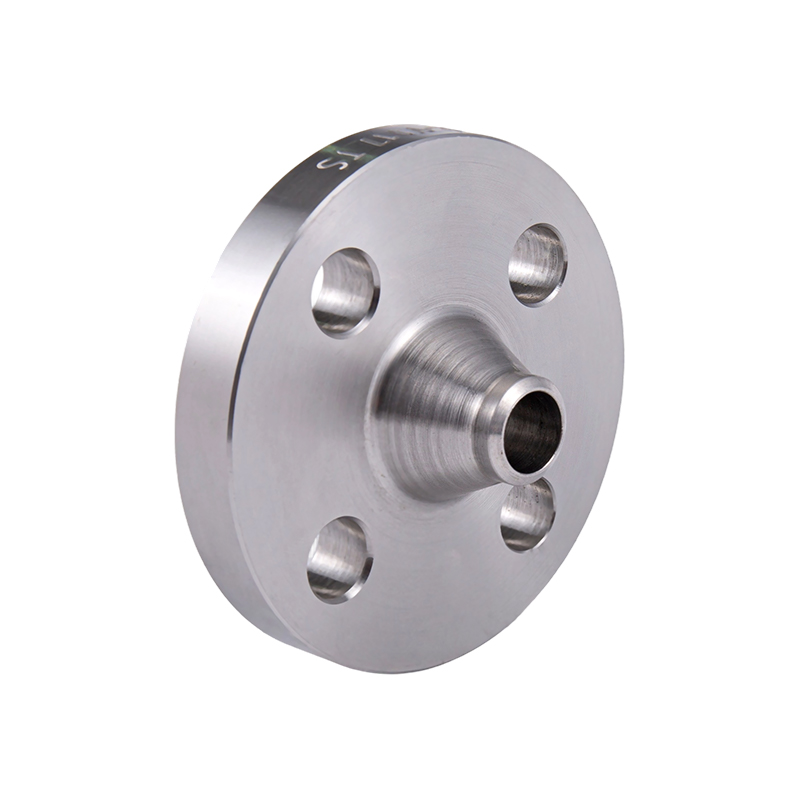
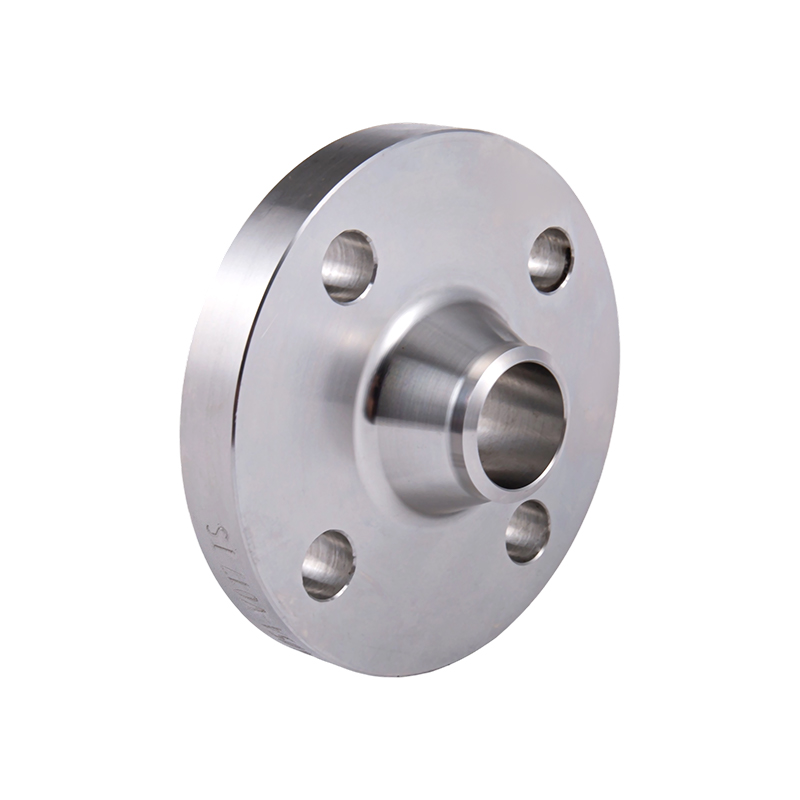
A weld neck flange is distinguished by one defining feature: a long, tapered hub that transitions smoothly from the flange body to the pipe wall. That taper is not decorative — it transfers mechanical stress away from the flange base and distributes it along the adjoining pipe, dramatically reducing the risk of fatigue failure under cyclic loading or pressure fluctuation.
Connection is made by butt-welding the pipe end to the neck of the flange. Because the bore of the flange is matched precisely to the inside diameter of the pipe, there are no ledges or recesses for fluid to catch on. Flow remains uninterrupted, and the risk of crevice corrosion at the joint is essentially eliminated.
Compared to slip-on or socket-weld flanges — both of which rely on fillet welds and leave an annular gap between pipe and flange — a weld neck design is the stronger, more reliable choice wherever pressure, temperature, or service life expectations are demanding. It costs more to purchase and install, but over the lifecycle of a plant or system, that premium typically pays for itself.
Carbon steel flanges are adequate for ambient, dry, or mildly corrosive services — but they corrode, scale, and eventually fail in wet, acidic, or high-temperature environments. Stainless steel solves those problems by adding chromium (and, in some grades, nickel and molybdenum) to form a passive oxide layer that resists attack from a wide range of media.
The two grades you will encounter most often are 304/304L and 316/316L. Here is how they differ in practice:
| Grade | Key Alloying Elements | Corrosion Resistance | Typical Applications |
|---|---|---|---|
| 304 / 304L | 18% Cr, 8% Ni | Good — resists most oxidizing environments | Water treatment, food processing, general piping |
| 316 / 316L | 16% Cr, 10% Ni, 2% Mo | Superior — resists chlorides and marine environments | Chemical processing, offshore, pharmaceutical |
The "L" designation (low carbon) matters when flanges will be welded in the field. Standard 304 and 316 can experience carbide precipitation at the heat-affected zone during welding, which degrades corrosion resistance near the weld bead. The L grades stay below 0.03% carbon, keeping that risk negligible without post-weld heat treatment.
For more aggressive environments — concentrated acids, elevated chloride concentrations, or sub-zero temperatures — duplex stainless grades such as F51 (2205) or super duplex F53 (2507) offer a significant step up in strength and corrosion resistance, at the cost of tighter processing requirements during forging and machining.
Selecting the wrong pressure class is one of the most consequential errors in flange specification. ASME B16.5 — the dominant standard for pipe flanges up to 24 inches nominal pipe size (NPS) — defines seven pressure classes: 150, 300, 400, 600, 900, 1500, and 2500. Each class sets a maximum allowable working pressure (MAWP) that decreases as temperature increases.
A Class 150 stainless steel flange, for example, is rated at approximately 275 psi at ambient temperature, but that rating drops to around 170 psi at 300°C. A Class 600 flange of the same material starts at roughly 1480 psi and still holds over 1000 psi at elevated temperature. The takeaway: always specify both the design pressure and the design temperature together, and check the pressure-temperature table for your material group before finalizing the class.
The companion material standard is ASTM A182, which governs forged or rolled alloy and stainless steel pipe flanges. A flange marked A182 F316L, for instance, tells you the material is 316L stainless, produced to forging quality, and independently traceable through mill test reports.
For larger sizes beyond 24 inches, ASME B16.47 Series A (MSS SP-44) and Series B (API 605) take over — an important distinction for refinery and pipeline projects where big-bore flanges are common. You can explore our forged stainless steel flanges for petrochemical and power applications that cover a broad range of ANSI/ASME pressure classes.
Weld neck flanges in stainless steel show up wherever the combination of joint integrity, corrosion resistance, and traceability is non-negotiable. The industries below illustrate the range:
Specifying a weld neck flange sounds straightforward, but getting each parameter correct requires working through a short sequence of decisions. Miss one and you risk an incompatible assembly, a failed hydrostatic test, or a warranty dispute. Here is a practical checklist:
For a broad selection of standard forged flanges vetted against these criteria, browse our complete range of standard forged flanges spanning multiple pressure classes and material grades.
Most stainless steel weld neck flanges can be sourced from standard inventory. But a significant share of real-world projects cannot: oversized nozzles on pressure vessels, non-standard bore diameters, unusual sealing face profiles, or flanges that must comply with a mix of international standards all require custom engineering.
Non-standard weld neck flanges are not simply modified catalog parts. They require a complete manufacturing package: engineering review of the customer's drawing, material selection and procurement from certified mills, dimensional machining to tight tolerances, heat treatment if the specification requires it, and full documentation through the final inspection report. The forging process is particularly critical — a properly executed forging refines grain structure and eliminates internal voids that casting can leave behind, producing a flange with measurably superior strength and fatigue life.
If your project requires dimensions, pressure ratings, or material combinations outside the standard tables, our team at Baihui Machinery can work from your drawings to supply custom non-standard stainless steel welding flanges tailored to your exact specifications — including high-temperature alloys, duplex grades, and NACE-compliant configurations.
Jiaxing Baihui Machinery Manufacturing Co., Ltd. has been producing forged flanges, tube sheets, and specialty forgings since 2007. The factory operates under a certified ISO 9001 quality management system and holds the Class B Special Equipment Manufacturing License issued by the People's Republic of China — a mandatory credential for pressure-bearing components in regulated industries.
International certifications include CE marking for the European market and Russia's CUTR032 certification, reflecting the breadth of export markets served. Baihui has also been formally listed as a qualified supplier by China National Nuclear Corporation, an approval that requires some of the most rigorous supplier audits in the manufacturing sector.
Capabilities span the full product lifecycle: raw material testing, forging, heat treatment, precision CNC machining, non-destructive testing, and final dimensional inspection — all on one site. OEM and ODM orders are supported, with engineering teams available to review customer drawings and advise on material or dimensional alternatives when needed.
Whether the requirement is a container-load of standard Class 150 stainless weld neck flanges or a small batch of engineered-to-order non-standard forgings for a nuclear or offshore project, Baihui has the equipment, certifications, and engineering depth to deliver consistently — and document every step of the process along the way.

ENG
Produkty
Kontaktné údaje.
+86-573-8553-5198
+86-136-1655-8299
+86-573-8553 5198
č. 207, Chuangye Road, mesto Zhapu, mesto Pinghu, provincia Zhejiang, Čína
QR kód
 Dodávatelia kovaných prírub z nehrdzavejúcej ocele